If you’ve ever driven or travelled on a classic Dennis Dart, you know the sound: that signature whine followed by a decisive, sometimes violent “BANG” as the gearbox grabs the next gear. While it might feel like the transmission is trying to exit the chassis, that “slam” is actually a characteristic of 1990s hydraulic engineering.
Today, we’re diving into why the AT545 behaves this way, especially when paired with a Telma retarder and an air throttle.
1. No Computer, Just Pressure
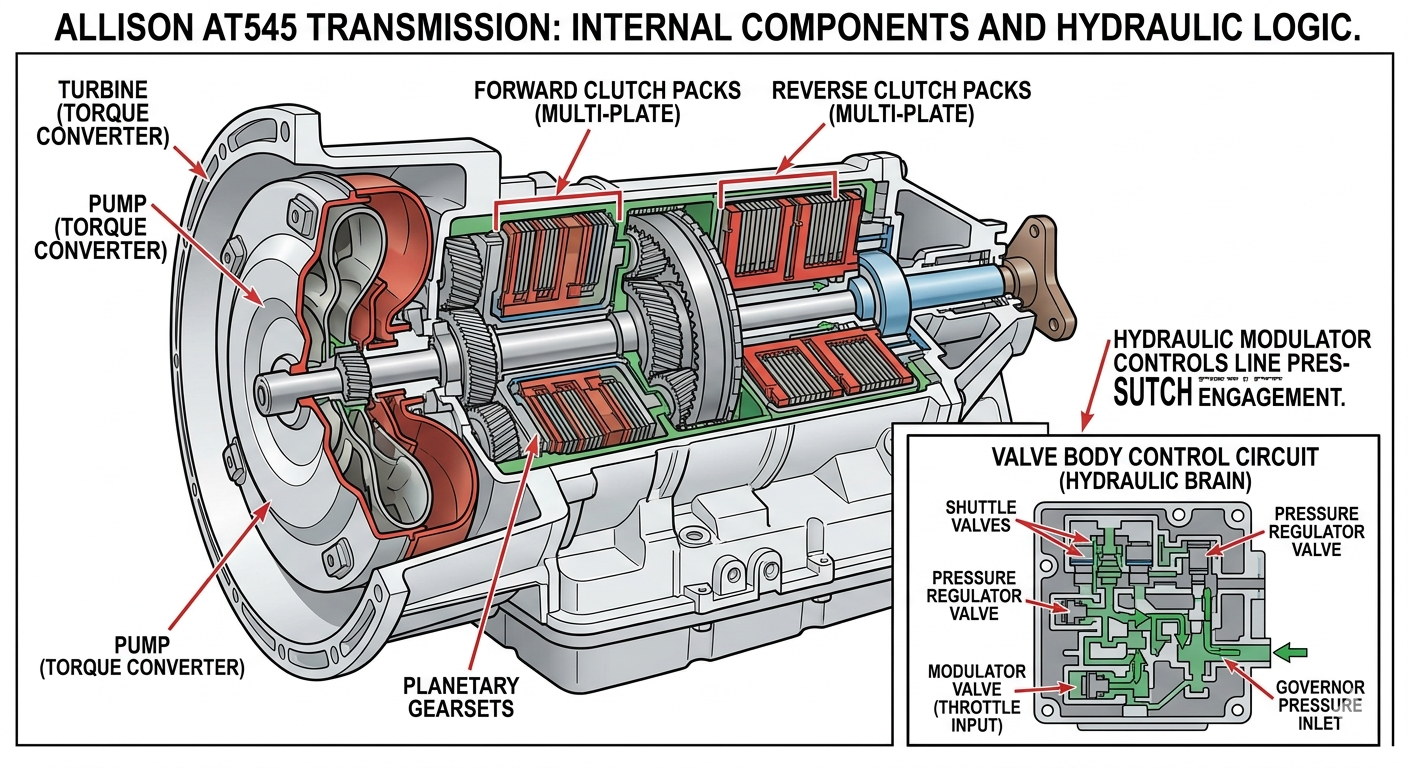
Unlike modern gearboxes, the AT545 has no electronic “brain.” It makes decisions using a tug-of-war between two hydraulic pressures:
Governor Pressure: Tells the box how fast the wheels are turning.
Modulator Pressure: Tells the box how hard you are pressing the throttle.
Image generated with AI might not reflect to true inside of the AT545 Gearbox
2. The “Telma Trap”
The most violent slams often happen right after using the Telma retarder. When you use the retarder to slow down, the Telma is braking the driveline, but the gearbox “thinks” you are just coasting.
Because the AT545 is slow to downshift while coasting, it often stays in a high gear until the very last second. When you come off the retarder and hit the air throttle, the engine revs up quickly, but the gearbox is still finishing its “late” downshift. The result? A massive surge of pressure that slams the clutch packs together to catch up with the engine.
3. The “False Neutral” Phenomenon
Have you noticed that when you stop, the bus feels like it’s in neutral for a second, then “nudges” forward?
The Telma slows the bus faster than the hydraulics can react.
Once stationary, the fluid finally moves to engage 1st gear.
This delay creates a “False Neutral” where the engine is disconnected from the wheels for a brief moment before the gear grabs.
Real telma retarders might be slightly different image of illustration purposes only
4. The Air Throttle Lag
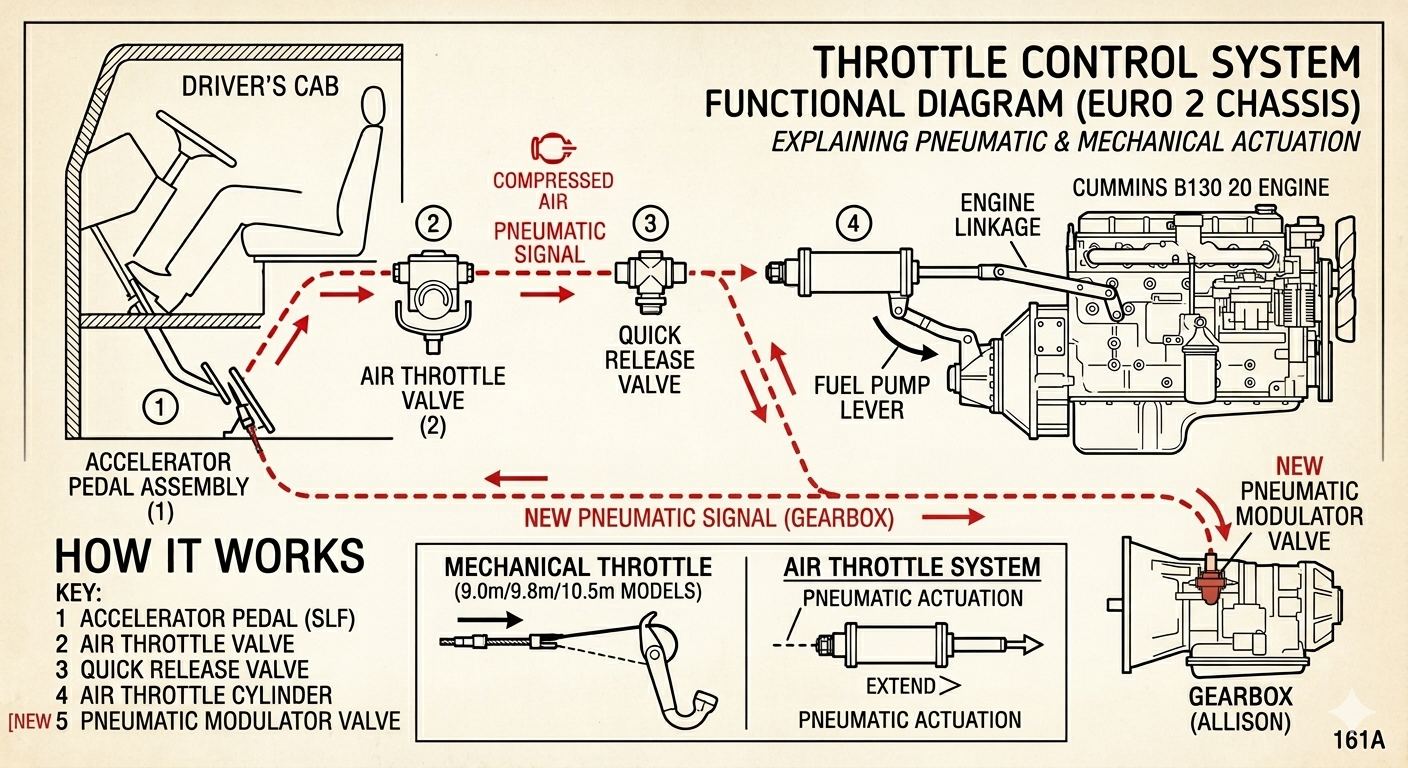
On a Dart, the air throttle adds another layer. There is a split-second delay between your foot hitting the floor and the air signal reaching the transmission’s modulator. In that split second, the Cummins 6BT has already started to rev, causing the gearbox to “panic” and jack up the line pressure to maximum.
Is the Slam Damaging the Box?
Generally, no. In the world of old-school hydraulics, a “firm” shift is a healthy shift. It means the clutches are biting hard and fast. A “soft” or “sliding” shift actually causes more heat and wear.
As long as your ATF stays red and doesn’t smell like burnt toast, that slam is just the sound of your Allison doing exactly what it was built to do!
Contains information related to marketing campaigns of the user. These are shared with Google AdWords / Google Ads when the Google Ads and Google Analytics accounts are linked together.
90 days
__utma
ID used to identify users and sessions
2 years after last activity
__utmt
Used to monitor number of Google Analytics server requests
10 minutes
__utmb
Used to distinguish new sessions and visits. This cookie is set when the GA.js javascript library is loaded and there is no existing __utmb cookie. The cookie is updated every time data is sent to the Google Analytics server.
30 minutes after last activity
__utmc
Used only with old Urchin versions of Google Analytics and not with GA.js. Was used to distinguish between new sessions and visits at the end of a session.
End of session (browser)
__utmz
Contains information about the traffic source or campaign that directed user to the website. The cookie is set when the GA.js javascript is loaded and updated when data is sent to the Google Anaytics server
6 months after last activity
__utmv
Contains custom information set by the web developer via the _setCustomVar method in Google Analytics. This cookie is updated every time new data is sent to the Google Analytics server.
2 years after last activity
__utmx
Used to determine whether a user is included in an A / B or Multivariate test.
18 months
_ga
ID used to identify users
2 years
_gali
Used by Google Analytics to determine which links on a page are being clicked
30 seconds
_ga_
ID used to identify users
2 years
_gid
ID used to identify users for 24 hours after last activity
24 hours
_gat
Used to monitor number of Google Analytics server requests when using Google Tag Manager