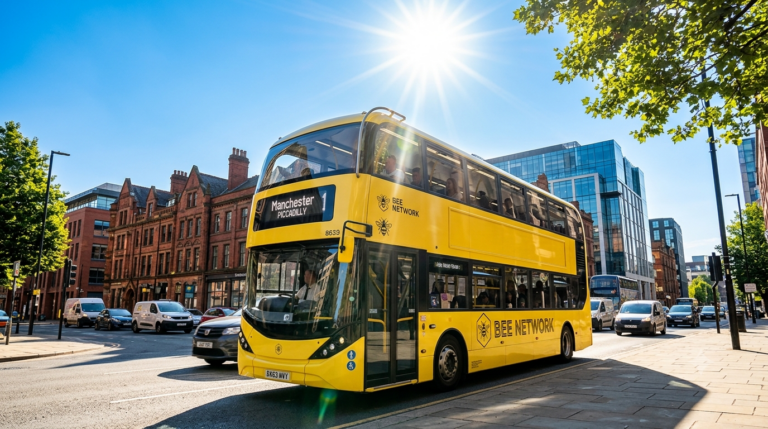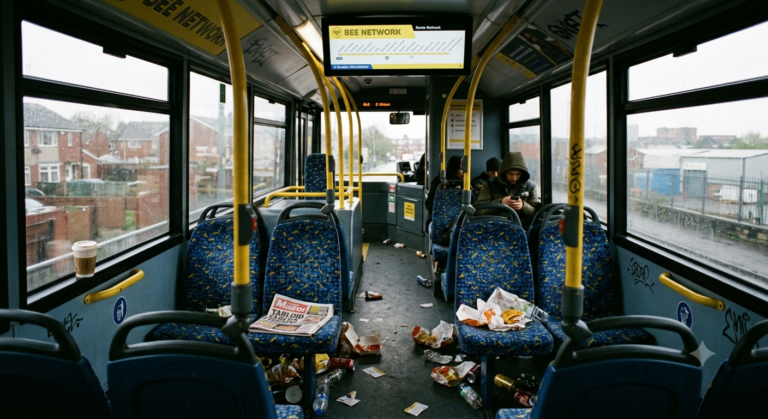

If you regularly travel by bus, or find yourself sitting near one in gridlock or at a bus station, you’ve probably noticed a common quirk. The bus is completely stopped, the doors might even be open, but every couple of minutes, the driver will suddenly and rhythmically rev the engine for a few seconds before letting it drop back to an idle.
To an outside observer, it can look like impatience—as if the driver is revving their engine like a racing car, waiting to pull away.
In reality, they are fighting a quiet battle against the bus’s onboard computer. Here is the real technical reason behind those engine “blips.”
The Handbrake Trigger & The Timeout Counter
Modern buses (including Euro 6 clean-diesels, hybrids, and electric-transition variants) are equipped with automatic fleet-management software called Idling Engine Shutdown.
This system is designed to monitor whether a bus has been abandoned or left running needlessly to waste fuel. The computer’s countdown timer doesn’t just start because the wheels stop turning; instead, it looks for a specific combination of inputs from the driver’s cab:
- The bus is at a complete standstill (0 mph).
- The accelerator pedal is at 0% (Idle).
- The handbrake is physically applied.
The moment that handbrake is pulled up and the driver’s feet are off the pedals, the Engine Control Unit (ECU) assumes the bus is parked and starts ticking down a countdown clock. If that timer reaches zero, the computer executes a hard shutdown, completely turning off the engine and cutting power to vital auxiliary systems.
To prevent this from happening, the driver has to interrupt the countdown.
The Two Main Scenarios: Gridlock vs. The Terminus
There are two distinct situations where a driver is forced to sit with the handbrake on, triggering this digital battle:
1. Stuck in Stationary Traffic
When a bus is caught in heavy gridlock, the driver will often keep the handbrake pulled up for safety but leave the transmission engaged in Drive (or any other forward gear) so they are ready to move the split second traffic clears.
However, leaving the bus in gear changes how the computer behaves due to how heavy-duty automatic transmissions (such as ZF EcoLife or Voith DIWA gearboxes) operate. With the handbrake locking the wheels but the transmission in Drive, the engine actively pushes against a locked drivetrain, causing the hydraulic fluid inside the torque converter to churn and shear.
This creates an immense, rapid heat spike that could cook the fluid and fry an expensive gearbox. To prevent this, the ECU changes its rules:
- In Neutral: The computer might give the driver a relaxed 5-minute window before shutting down.
- In Gear: The computer spots the danger of rapid heat buildup and slashes the timeout counter down drastically—often to just 1 or 2 minutes—triggering a rapid-fire succession of dashboard warning buzzers.
2. Waiting at a Terminus or Timing Point
The other incredibly common time you will hear this happen is when a bus is sitting at a terminus, a bus station, or a roadside timing point waiting for its scheduled departure time.
If a driver is running early or has a 5-minute layover before the next trip, they need to keep the bus active. While they will usually shift the gearbox into Neutral here (giving them the longer 5-minute timer), the clock is still ticking. If they are sitting out a mid-route timing point to keep to the timetable, that 5-minute buzzer will creep up on them fast.
How Drivers Outsmart the System (The Two Methods)
To keep the bus alive, the driver must break the three-part circuit (Standstill + Idle + Handbrake) that the ECU is watching. Experienced drivers generally use one of two clever methods to satisfy the computer that there is “still a driver” actively at the wheel.
Method 1: The Deliberate Throttle “Blip”
You might think a driver could just lightly feather the accelerator pedal with their toe to keep the engine awake, but the bus’s computer ignores tiny movements to prevent being fooled by an electrical glitch or a driver accidentally bumping the pedal with a heavy boot.
To successfully reset the clock via the throttle, the driver has to make a substantial, deliberate input:
- The Depth: The driver must press the pedal down to at least a quarter (25%) of its full travel.
- The Duration: They have to hold it there for a solid two seconds.
This is why the rev isn’t a quiet whisper—it’s a distinct, noticeable roar from the engine saloon. It breaks the 0% throttle condition, resetting the timer. As a bonus when stuck in traffic, it also speeds up the transmission’s oil pump, circulating hot fluid out of the torque converter and into the cooling matrix to bring temperatures down.
Method 2: The Handbrake Flick
If a driver doesn’t want to keep revving the engine—especially if they are sitting at a quiet terminus or a tight bus station where revving might disturb neighbors or waiting passengers—they use a slick mechanical workaround.
Because the ECU relies on the physical handbrake switch to know if the bus is parked, the driver can simply release the handbrake lever roughly halfway.
By dropping the lever just enough to turn off the dashboard warning light before instantly reapplying it, the circuit is broken. The ECU registers that the handbrake has been released and reset, believing the bus is about to move. This instantly wipes the countdown timer back to zero, allowing the engine to keep idling smoothly without making a sound.
How is This Different From Modern “Stop-Start”?
It is easy for passengers to confuse this with modern “Stop-Start” technology (often called micro-hybrid systems). Many people assume stop-start is only on hybrid or electric buses, but it is widely fitted to normal diesel buses these days (such as modern Alexander Dennis Enviro MMCs with SmartPack technology or Wrightbus diesels).
In fact, a modern diesel bus often has both systems active under the hood, operating on entirely separate logic:
| Feature | Modern Diesel Stop-Start | Idling Engine Shutdown (The Counter) |
| Primary Target | Short, routine stops (Traffic lights, junctions) | Long, unexpected stops (Gridlock, layovers, terminuses) |
| Activation Time | Almost instantly (seconds after stopping) | Delayed (1 to 5 minutes depending on gear) |
| Driver Warning | None — it is completely automatic | Dash message and/or audible warning buzzer |
| How to Prevent It | Keep crawling or feather the footbrake | A 1/4-throttle blip for 2 seconds OR a quick handbrake flick |
| The Restart | Instant and seamless when the brake is released | Full manual restart (cycling the key/starter button) |
If a modern diesel Stop-Start system cuts the engine at a red light, it is a smart eco-mode designed to restart seamlessly the instant the driver touches the pedal to pull away.
But if the Idling Shutdown counter hits zero, it results in a hard, protective shutdown. The ignition cuts out, the air compressors stop pumping (meaning air brake pressure can drop), and vital systems like passenger saloon heating or air conditioning turn completely off.
If a driver is mid-route at a timing point on a freezing winter day or a scorching summer afternoon, letting the engine kill the climate control makes for a very uncomfortable saloon for the passengers on board. Furthermore, restarting a heavy commercial diesel engine from a hard shutdown takes time, causing an embarrassing lag when it’s finally time to drop the handbrake and pull away.
The Verdict: Next time you hear a bus engine revving rhythmically while stuck in traffic, or notice the driver subtly working the handbrake lever at a terminus, they aren’t being impatient. They are simply outsmarting the bus’s computer to keep the air pressure up, the heating or air conditioning running, and the vehicle instantly ready to move the second it’s time to go!