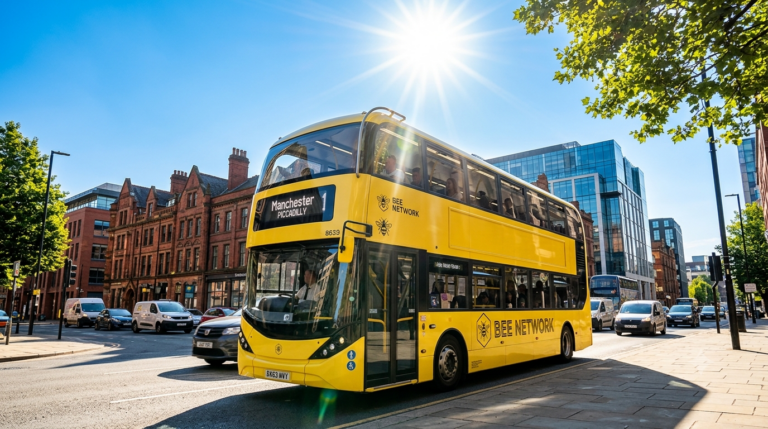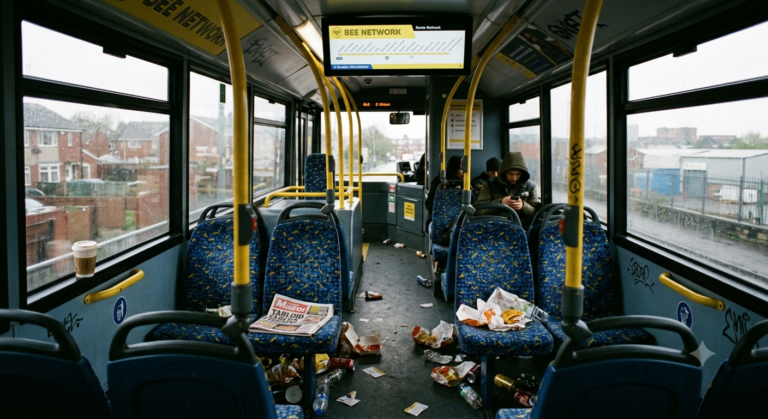

We’ve all been there: it’s the peak of summer, the bus feels like a greenhouse, and you wonder why the driver won’t just turn the air conditioning on—or conversely, it’s a freezing winter morning, and the heating feels non-existent.
The truth is, your driver usually has absolutely no control over the saloon temperature. Here is an inside look at how climate control actually works on modern UK buses, why they take so long to warm up, and the secret mechanics—and depot shortcuts—behind keeping the saloon moving.
The Driver Isn’t in Control (Blame the Thermostat)
On most modern buses operated by larger companies, climate control is standard, but it is incredibly basic.
📌 A Quick Note on “Air Con”: True Air Conditioning (which actually chills the air) is usually an expensive optional extra. Because AC units heavily bump up the initial purchase price of the bus, use more fuel to run, and cost a lot to maintain, most UK operators choose not to spec it. Instead, what you are usually feeling is just standard forced-air ventilation mixed with the bus’s heating system.
Just like your heating at home, this basic system relies on a thermostat placed somewhere in the passenger saloon. This thermostat communicates with the bus’s HVAC (Heating, Ventilation, and Air Conditioning) system to aim for a set target temperature.
- The Engineering Team sets this target temperature via the computer.
- The Driver only has control over their own cab demister temperature and fan speed.
The Summer Thermostat Glitch
Have you ever stepped onto a bus on a boiling hot summer day only to find the heaters blasting out scorching air? The driver hasn’t done this to torture you!
What usually happens is a faulty or poorly placed saloon thermostat. If the thermostat fails, misreads the temperature, or gets covered, it tells the HVAC computer that the bus is “freezing.” The system responds by dumping maximum heat into a saloon that is already boiling. Because the driver doesn’t have a master override switch, they are stuck baking right along with the passengers until the bus gets back to the depot.
Why First Buses in the Morning Stay Freezing
If you catch the first bus of the day during winter, you’ll know it can take a long time to warm up. Even if the engine itself is warm, getting that heat to the passengers is a massive logistical challenge for the plumbing.
- 30 Liters of Coolant: A standard car only holds a few liters, but a bus typically holds around 30 liters of coolant.
- Massive Piping Networks: The coolant has to travel from the engine at the very back of the bus all the way to the front, and—if it’s a double-decker—all the way upstairs too.
- The Warm-Up Delay: On a freezing morning, those metal pipes are ice-cold. As the engine’s water pump circulates the hot coolant, the heat is rapidly lost just trying to warm up the pipes and the multiple radiators/fan units hidden throughout the saloon. It takes significant time for actual warm air to start blowing.
Summer Mode & The “Cheap Repair” Trap
When summer finally arrives and the digital thermostat isn’t always enough to stop the heat, the engineering team has a more permanent solution. They have to physically go into the engine bay and turn off manual isolation taps.
This cuts off the flow of hot engine coolant to the passenger saloon entirely, meaning the fans will only blow ambient air.
However, out on the road, drivers sometimes encounter a “cheap repair” trap. If the isolation taps spring a leak, a cash-strapped depot or a rushed fitter might bypass the taps entirely with a straight pipe as a “temporary” measure to get the bus back on service. The problem? Without those taps, there is no physical way to isolate the saloon. The heating is stuck in the ON position, turning the bus into a rolling sauna for the rest of the summer.
If the taps are working and successfully closed, it creates a hidden mechanical risk:
⚠️ The Overheating Risk: By shutting these taps, engineers effectively shorten the size of the cooling system. If a bus has a radiator slightly blocked by road dirt, or a weak cooling fan, the engine has a much higher chance of overheating under heavy load (like driving on the motorway) because there is less fluid volume to absorb and dissipate the heat.
The “Deafening Fan” Quick-Fix
To overcome this overheating risk once the taps are shut, the engineering team has a classic depot trick. They can bypass or unplug the thermostat in the engine bay that controls the main engine cooling fans.
When you unplug this sensor, it tricks the bus’s computer. Because the computer suddenly doesn’t know whether the engine is hot or cold, it plays it safe and defaults to turning the massive engine cooling fans on at 100% full blast.
If you have ever stood at a bus stop and a bus pulls up sounding like a roaring jet engine—even while just idling—this is exactly why. The fans are stuck on full speed.
While fixing it is usually as simple as plugging the sensor back in, these bypasses are very frequently forgotten about. Once a bus gets modified like this, it often stays that way for the rest of its working life because it’s easier to leave it alone than to keep changing it back and forth.
The Unwritten Rules of the Engine Bay
Many experienced drivers know exactly where those isolation taps are. On a freezing winter morning, if the cab demisters are still blowing ice-cold air after an hour of driving, a driver might be tempted to nip round the back and check if engineering forgot to turn the taps back on.
However, doing this walks a very fine line with company policy:
- Company Policy vs. Law: To be absolutely clear, it is company policy, not the law, that forbids drivers from opening the engine bay cover due to the risk of moving parts. In theory, if you use your brain and are careful, there is zero risk.
- The “Start from the Back” Stand-Off: This policy is why many drivers point-blank refuse to use the external engineering start buttons hidden inside the engine bay—even when instructed by management. Those rear buttons bypass certain cab safety systems to fire the engine up locally, but because it requires opening the flap, many drivers simply won’t do it.
The Danger of DIY Tap Twisting
If a driver does decide to rebel against policy and open those coolant taps themselves on the road, they might be walking into a trap.
If the saloon heater loop originally suffered a major leak, engineering’s standard roadside fix is to shut the taps, isolate the saloon, and refill just the engine loop (which only takes 10 to 15 liters). It’s a brilliant way to get the bus mobile again, but the saloon loop is left completely empty.
If a driver opens those taps on the road without realizing, all the coolant from the engine will instantly rush out to fill the empty saloon pipes. Within seconds, a Low Coolant warning will light up the dash, potentially stranding the bus. And just like the fan bypasses, once the bus gets back to the depot and the pipe is finally mended, fitters often forget to reopen the taps anyway!
The Driver’s Emergency Trick
If a bus is overheating on the road and hasn’t had its fans bypassed yet, you might notice the driver turning their cab demisters on full blast with maximum heat. They are doing this to manually draw excess heat away from the engine to save it from boiling over. We do the exact same thing with our preserved fleet when the temperature gauge starts creeping up!
The Secret Weapon: The Boost Pump
Because a standard engine water pump isn’t always strong enough to push 30 liters of coolant through dozens of meters of piping, buses are fitted with an electrical Boost Pump.
Located somewhere after the isolation taps, its sole job is to speed up the flow of coolant around the saloon system to keep the heat moving. Depending on the bus, these can be hidden anywhere:
- On our preserved Rossendale Dart (114), the boost pump is located right behind the front bumper.
- On our 581, the boost pump lives directly in the engine bay.
Next time you step onto a bus that’s a bit too hot, a bit too cold, or sounds like a Boeing 747 at the bus stop, remember—there’s a massive network of pipes, taps, bypassed sensors, and hidden depot politics working hard behind the scenes, and the driver is just along for the ride!